Atypical Path (Voie Atypique) 🐙, landmarks for understanding cognitive diversity better



Autistic Social Camouflaging: Blending into the Norm
“But you don’t look autistic!”. This simple sentence illustrates a paradoxical situation: without camouflaging, an autistic person risks being rejected or stigmatized. With camouflaging, their difficulties (partially hidden) risk being minimized or misunderstood.
TSA
Claire from Atypical Path (Voie Atypique) 🐙
12/4/2025
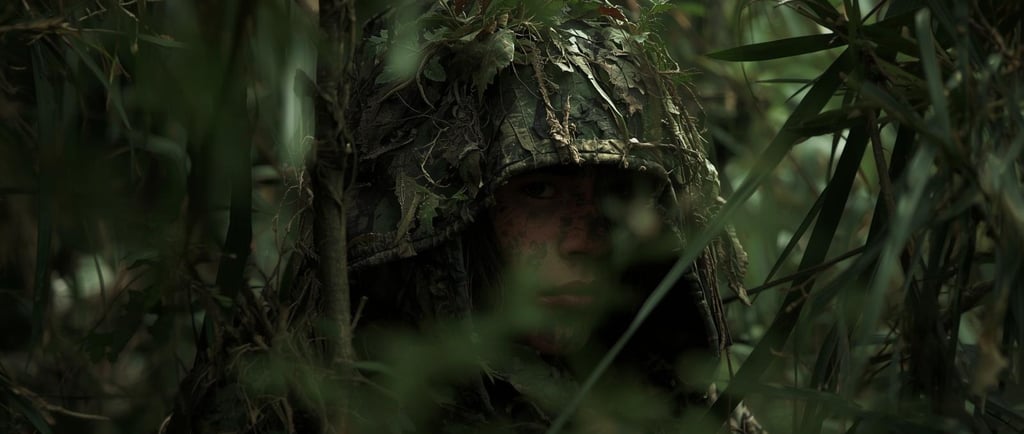
For a person on the autism spectrum (ASD), social integration can sometimes involve trying to make their autistic characteristics invisible [17].
Fitting more into the norm in order to better integrate into the group is one of the main motivations behind social camouflaging.
This adaptation strategy, more or less conscious, is not specific to ASD. Forms of camouflaging are also found in people with social anxiety, for example.
However, we will examine it here in the context of autism.
Camouflaging, but how?
Two main autistic social camouflaging strategies are generally distinguished [14]:
Compensation
This consists in using mechanisms and techniques to create new behaviours intended to compensate for certain social difficulties. It can take superficial forms, such as repeating ready-made phrases, or deeper forms that involve a fine-grained analysis of social behaviour [21].
For example, I adopt a listening posture so as not to monopolise the conversation. I structure conversation “scripts” to reduce the risk of saying something considered socially inappropriate. I laugh at the right moment. I use behaviours learned from watching other people interact (films, television, social situations). I maintain a constant smile, even when in distress, in order to appear calm.
Masking
Masking aims to hide or inhibit autistic behaviours such as avoiding eye contact. It involves suppressing or holding back natural behaviours in order to adopt others perceived as socially acceptable.
For example, I look my interlocutor in the eyes, even though it feels uncomfortable. I hold back my body rocking in public. I try not to flap my hands to express joy. I avoid sharing my special interests. I avoid tapping or finger movements that might annoy people.
These strategies are guided by two central motivations: assimilation and connection (creating social bonds) [14].
Assimilation
Assimilation refers to adopting the group’s codes and behaviours in order to blend into the social norm. It then guides masking and compensation by influencing how a person adjusts their communication.
For example, I mirror some of the vocal intonations and relational codes of the group I want to join. If humour is part of those codes, I use it to facilitate interactions or to compensate for my difficulties. I am aware of the impression I make on others. I feel like I have to play a role and cannot be myself. I do not want to draw attention to myself by seeming different.
This phenomenon of social camouflaging is attracting growing interest in scientific research and in clinical practice, both to better understand its mechanisms and consequences and to improve support for those concerned.
Why does an autistic person camouflage?
Reported motivations are varied and often cumulative:
Avoiding rejection or stigmatisation [7, 10, 24, 25]
Improving social integration [14]
Making friends, even if this may make relationships feel less authentic [3, 26, 29]
Succeeding in a job interview or accessing professional opportunities [11]
Protecting self-esteem [10, 27]
Managing the impression one gives, avoiding making others uncomfortable, seeming less different and integrating more easily into predominantly neurotypical environments [3]
Overall, the less accepted a person feels, the more likely they are to camouflage [7]. Over time, some people report that camouflaging becomes automatic, almost like a second nature, to the point of being used without fully realising it [3].
This adaptation strategy can offer social gains: the person weighs up the risks (rejection, discrimination) and compares them with the costs, then adjusts their behaviour [24, 25].
Camouflaging can therefore be understood as a protective strategy in response to negative experiences [24, 25]. Some autistic people even describe it as a survival strategy in an environment poorly adapted to neurodivergence [27].
Motivations may also vary by gender: autistic women more often mention functional reasons (academic or professional success), whereas autistic men more often associate camouflaging with the wish to make social interactions more comfortable [1].
Camouflaging, but at what cost?
The situation is paradoxical: without camouflaging, the autistic person risks being rejected and stigmatised; but by camouflaging, they expose themselves to negative impacts on their mental health.
Several studies highlight important psychological costs associated with frequent camouflaging:
high levels of stress [31]
loss of sense of identity, which may be accompanied by anxiety or depression [1, 2, 5, 10, 18, 31]
chronic fatigue linked to the constant effort required to control natural behaviours [1, 29]
difficulties maintaining authentic social relationships [1, 26]
reduced self-esteem [10, 31]
reduced sense of authenticity, sometimes leading to feeling disconnected from oneself [10]
increased risk of suicidal ideation or behaviour [1, 29]
These findings are mainly correlational; they do not establish a direct causal link, but they show robust associations between camouflaging and reduced quality of life [5].
Camouflaging thus appears to be an adaptive short-term strategy that may be detrimental in the long term: it can offer partial protection from situations of rejection, but does not remove the vulnerability linked to stigmatisation [27].
Time spent camouflaging (combining frequency and duration) is one of the factors most strongly associated with mental health deterioration [2]. Changing contexts (having to adjust one’s camouflaging to the social codes of each situation) also proves very costly, and is as taxing as permanent camouflaging [3].
“You don’t look autistic”
A socially “normalised” self-presentation can hide real difficulties: the person “doesn’t look autistic”. These difficulties may then be minimised by relatives and health professionals [9].
This invisibilisation of difficulties can create issues of legitimacy, for example when the need for workplace accommodations is questioned because it does not appear obvious at first glance [21].
Social camouflaging may also help explain some diagnostic delays: because symptoms are partly masked by compensatory strategies, the clinical picture appears more subtle [24].
The consequences of autistic camouflaging thus affect several dimensions – clinical recognition, mental health, identity – and show that camouflaging is a major public health issue [21].
A phenomenon observed in both sexes
Autistic camouflaging is present in both men and women.
However, not every autistic person camouflages. Differences appear as early as early childhood [4], suggesting varied developmental trajectories.
There is a positive relationship between the intensity of autistic characteristics and the extent of camouflaging: the more pronounced the characteristics, the higher the level of camouflaging tends to be [1].
Autistic adults have significantly higher camouflaging scores than non-autistic people [15].
Among autistic people, camouflaging is more frequent in girls and women than in boys and men [3, 7, 18, 28, 33].
Among non-autistic people, no male/female difference has been observed [7]. This suggests that camouflaging is not a general “feminine” characteristic, but a phenomenon specifically more pronounced among autistic women [15].
This higher prevalence among autistic women may therefore be one of the factors contributing to the delay or misdiagnosis of autism in women, and may partly account for the male preponderance classically reported in epidemiological studies (approximately a 4:1 male-to-female ratio) [22].
Non-binary people, whether autistic or not, also tend to show high camouflaging scores, but these findings should be interpreted with caution due to small sample sizes [7].
How can we explain such a predominance in autistic women?
Several hypotheses, which require further studies to confirm them, have been proposed to explain this observation:
Social pressures and expectations
Girls and women, autistic or not, often face stronger social pressure to adopt prosocial behaviours than boys and men [3]. Their socialisation tends to push them to be more attentive to others’ needs and to integrate socially.
This pressure may strengthen the motivation to camouflage [15]. However, this hypothesis alone does not explain the difference between autistic and non-autistic women.
The female autism phenotype
The “female autism phenotype” refers to a proposed pattern of expression described in some studies (results still exploratory). Some autistic girls and women may have relatively preserved verbal skills, more effective social imitation, and restricted interests that are more readily seen as socially acceptable (for example, focused on animals, fiction or psychology) [16].
These behavioural characteristics could contribute to a greater likelihood of camouflaging their difficulties, making autism less visible in clinical assessments [16].
Female protective effect
According to the female protective effect hypothesis, women may need to accumulate a greater load of genetic variants associated with ASD before reaching the clinical diagnosis threshold [20, 32].
Recent neuroimaging genetics studies show that the same genetic factors linked to autism alter certain brain connections more strongly in men than in women [20, 32].
In this perspective, the apparent predominance of more subtle forms of autism in women could be explained by a combination of several factors, including lower biological sensitivity to genetic risk and more frequent use of camouflaging, which together make their autistic manifestations harder to detect.
Autistic camouflaging in women
Self-awareness and self-presentation
Several exploratory studies suggest a specific link between camouflaging and attention to social self-presentation in autistic women.
One study showed that women who camouflage more have lower facial emotional expressivity, which may reflect voluntary inhibition of their emotions to appear more “typical”.
This link was not found in men, suggesting that camouflaging mechanisms may differ partly by sex [28].
Neurobiological hypothesis
Exploratory studies suggest possible avenues regarding how camouflaging is supported at the neural level.
The ventromedial prefrontal cortex, involved notably in self-reference and self-representation, shows stronger activation in autistic women the higher their camouflaging scores. This association was not found in autistic men, suggesting that the processes mobilised in camouflaging may differ by sex [19].
Another study found an excitation/inhibition imbalance in the medial prefrontal cortex in autistic men but not in autistic women. A more preserved excitation/inhibition balance in this region could support greater camouflaging capacities in autistic women. Genetic and hormonal factors may explain this divergence between men and women [30].
Preliminary data also suggest neuroanatomical sex differences in autistic people: in women, higher camouflaging scores are associated with reduced grey matter volume in certain regions involved in memory, emotions and coordination; this association is not found in men [18].
These observations, based on small samples and heterogeneous methods, must be interpreted with caution. They serve to generate hypotheses about sex differences in the adaptation strategies mobilised during camouflaging.
Cognitive hypothesis
Autobiographical memory might contribute to the male/female differences observed among autistic people: girls and women may have better abilities to recall personal events than boys and men. This ability could help them analyse present social situations using precise memories of past contexts, allowing them to fine-tune their social behaviour [13].
These social episodes could then be recalled consciously and explicitly [29], somewhat like learning a second social language. In the same way, they would decode relational codes and apply them [21].
Again, these results are preliminary (small samples, varied methods) and require further research.
Which factors increase the likelihood of camouflaging?
Regardless of sex, several characteristics may increase the capacity or likelihood of camouflaging [6, 7]:
good executive functions such as planning, vigilance, inhibition and flexibility [18];
enhanced social attention;
strong motivation to conform to group expectations [21];
some studies find an association with higher Intelligence Quotient (IQ), especially verbal IQ, but findings are heterogeneous [33].
These factors do not mean that people who have them will necessarily camouflage.
Limits and research needs
Social camouflaging raises several important conceptual and methodological issues: it is difficult to measure objectively and is not specific to ASD.
A poorly defined and heterogeneous concept
It can refer to various realities: a subjective experience (e.g. feeling socially effortful), a set of cognitive strategies (e.g. preparing social scripts), observable behaviours (e.g. forcing eye contact), or even an end result (e.g. making one’s ASD invisible) [12].
This heterogeneity still leaves the exact boundaries of the phenomenon unclear [12].
Risk of over-interpretation
There is a risk of pathologising typical social behaviours such as concealing personal characteristics to better adapt socially, or, conversely, of over-extending diagnostic boundaries [8, 12].
Limited generalisation of findings
Samples used in camouflaging studies often consist of white adults (notably women), without intellectual disability, and diagnosed in adulthood.
These characteristics limit how far the findings can be generalised to the entire autistic population [6, 8]. It is therefore essential to extend studies to other cultural contexts and profiles, particularly autistic children and adolescents [6].
A phenomenon still imperfectly operationalised
Current tools rely mainly on self-report (e.g. CAT-Q), which is sensitive to memory bias and social desirability [5]. Since the measurement of camouflaging largely depends on subjective experience, fully objective assessment remains difficult. One can therefore say that the phenomenon is still in the process of being operationalised [8].
Methodological limitations
Studies on camouflaging are relatively few, often involve small samples, and rarely use objective or observational measures. The lack of longitudinal studies prevents establishing causal links between camouflaging and, for example, its psychological costs [6].
An individual and societal phenomenon
Camouflaging is a multidimensional phenomenon, behavioural, cognitive and contextual.
Research converges on the idea that it is a central feature of adult autism, influenced by gender, stigmatisation and the social environment [3, 6, 7, 16, 18, 24].
Camouflaging is not only an individual issue: it is also a response to a lack of social acceptance [2, 24, 25]. The more tolerant and adapted the environment is to autistic people, the less this strategy appears necessary [2, 9].
Camouflaging and autistic identity
Camouflaging can coexist with a positive identification with autism and engagement in the autistic community. Many autistic people express pride in being autistic, while continuing to camouflage behaviours deemed socially “unacceptable” or deviant from norms. It is therefore possible to be proud of being autistic and still camouflage, because society remains stigmatising [2].
Stigmatisation predicts camouflaging
Camouflaging appears as a direct response to social stigma: the more a person perceives their autistic characteristics as inadequate in light of social norms, the more likely they are to camouflage. Camouflaging thus manifests under the pressure to conform to non-autistic expectations in order to avoid stigmatisation [24].
By way of conclusion
The concept of social camouflaging in autism refers to an adaptation strategy that can help avoid certain situations of rejection. But it often comes with a considerable psychological cost and may contribute to delayed or even missed diagnoses.
Better understanding this phenomenon is therefore crucial, both for autistic people and for health professionals, in order to adapt support and to acknowledge its ambivalent effects.
However, many uncertainties remain, notably because of methodological variability, the absence of longitudinal studies, and the limited diversity of study samples. Further research is needed to strengthen and deepen our understanding of this social, behavioural and psychological phenomenon, and to clarify its mechanisms as well as its consequences.
What alternatives are there?
Alternatives to camouflaging can be considered.
At the individual level
Tailored therapeutic support, such as Acceptance and Commitment Therapy (ACT), can help autistic people live more in line with their values and reduce the perceived need to play a role in order to be accepted.
Peer-support groups offer a space to share experiences, help people feel understood and legitimised, and reduce the pressure to conform to social norms.
Autistic community spaces strengthen self-esteem and a sense of authenticity. They are important protective factors [10].
Spending time with people who accept and even value autistic traits appears to have a beneficial effect, gradually reducing the need to resort to camouflaging [2, 9].
At the societal level
The neurodiversity movement is helping to change how autism is perceived: instead of being portrayed as a defect to correct, it is seen as a difference to understand and respect [9].
Adapting social environments (school, workplace, institutions) through inclusive settings helps reduce stigmatisation and the implicit pressure to camouflage. Anti-prejudice interventions, public education and the promotion of inclusive social norms also play an essential role [24].
Alternative forms of communication could also help shift social norms, making them more comfortable and adapted for autistic people. This might involve, for example, more direct and literal communication, using shared interests, structuring interactions or focusing on a task, and favouring deep conversations over superficial “small talk” [27].
Références
Alaghband-rad, J., Hajikarim-Hamedani, A., & Motamed, M. (2023). Camouflage and masking behavior in adult autism. Frontiers in Psychiatry, 14, 1108110. https://doi.org/10.3389/fpsyt.2023.1108110
Bradley, L., Shaw, R., Baron-Cohen, S., & Cassidy, S. (2021). Autistic adults’ experiences of camouflaging and its perceived impact on mental health. Autism in Adulthood, 3(4), 320-329. https://doi.org/10.1089/aut.2020.0071
Cage, E., & Troxell-Whitman, Z. (2019). Understanding the reasons, contexts and costs of camouflaging for autistic adults. Journal of Autism and Developmental Disorders, 49(5), 1899–1911. https://link.springer.com/article/10.1007/s10803-018-03878-x
Chawarska, K., Macari, S., Powell, K., DiNicola, L., & Shic, F. (2016). Enhanced social attention in female infant siblings at risk for autism. Journal of the American Academy of Child and Adolescent Psychiatry, 55(3), 188-195. https://doi.org/10.1016/j.jaac.2015.11.016
Cook, J., Hull, L., Crane, L., & Mandy, W. (2021). Self-reported camouflaging behaviours used by autistic adults during everyday social interactions. Autism in Adulthood, 3(2), 123-134. https://doi.org/10.1177/13623613211026754
Cook, J., Hull, L., Crane, L., & Mandy, W. (2021). Camouflaging in autism: A systematic review. Clinical Psychology Review, 89, 102073. https://discovery.ucl.ac.uk/id/eprint/10134806/1/Camouflaging%20in%20autism_a%20systematic%20review_accepted%20manuscript.pdf
Cremone, I. M., D’Ascenzo, S., Palumbo, L., et al. (2023). Measuring social camouflaging in individuals with high functioning autism: A literature review. Brain Sciences, 13(4), 469. https://doi.org/10.3390/brainsci13030469
Cumin, J., Pelaez, S., & Mottron, L. (2022). Positive and differential diagnosis of autism in verbal women of typical intelligence: A Delphi study. Autism, 26(6). https://doi.org/10.1177/1362361321104271
Dachez, J. (2024). L'autisme, autrement : Rompre avec la vision médicale, embrasser la neurodiversité.
Evans, J. A., Krumrei-Mancuso, E. J., & Rouse, S. V. (2024). What you are hiding could be hurting you: Autistic masking in relation to mental health, interpersonal trauma, authenticity, and self-esteem. Autism in Adulthood, 6(2), 98-108. https://doi.org/10.1089/aut.2022.0115
Finn, G., Robertson, A. E., Dudley, C., & Baranowski, J. (2023). “If I’m just me, I doubt I’d get the job”: A qualitative exploration of autistic people’s experiences in job interviews. Autism in Adulthood, 5(2), 98-108. https://doi.org/10.1177/13623613231153480
Fombonne, E. (2020). Camouflage and autism. Journal of Child Psychology and Psychiatry, 61(7), 735-738. https://doi.org/10.1111/jcpp.13296
Goddard, L., Dritschel, B., & Howlin, P. (2014). A preliminary study of gender differences in autobiographical memory in children with an autism spectrum disorder. Journal of Autism and Developmental Disorders, 44(9), 2087-2095. https://link.springer.com/article/10.1007/s10803-014-2109-7
Hull, L., et coll. (2017). “Putting on my best normal”: Social camouflaging in adults with autism spectrum conditions. Journal of Autism and Developmental Disorders, 47(8), 2519-2534. https://pmc.ncbi.nlm.nih.gov/articles/PMC5509825/
Hull, L., Lai, M. C., Baron-Cohen, S., Allison, C., Smith, P., Petrides, K. V., et al. (2019). Gender differences in self-reported camouflaging in autistic and non-autistic adults. Autism. https://doi.org/10.1177/1362361319864804
Hull, L., Petrides, K., & Mandy, W. (2020). The Female Autism Phenotype and Camouflaging: a Narrative Review. Review Journal of Autism and Developmental Disorders, 7, 306 - 317. https://doi.org/10.1007/s40489-020-00197-9
Lacroix, A. (2023). Autisme au féminin : Approches historique et scientifique, regards cliniques. UGA Editions.
Lai, M.-C., et coll. (2017). Quantifying and exploring camouflaging in men and women with autism. Autism, 21(6), 690–702. https://doi.org/10.1177/1362361316671012
Lai, M.-C., et coll. (2019). Neural self-representation in autistic women and association with compensatory camouflaging. Autism, 23(8), 2110–2123. https://doi.org/10.1177/1362361318807159
Lawrence, K., Hernandez, L., Fuster, E., Padgaonkar, N., Patterson, G., Jung, J., Okada, N., Lowe, J., Hoekstra, J., Jack, A., Aylward, E., Gaab, N., Van Horn, J., Bernier, R., McPartland, J., Webb, S., Pelphrey, K., Green, S., Bookheimer, S., Geschwind, D., & Dapretto, M. (2021). Impact of autism genetic risk on brain connectivity: a mechanism for the female protective effect. Brain: a journal of neurology. https://doi.org/10.1093/brain/awab204
Livingston, L. A., Shah, P., & Happé, F. (2019). Compensatory strategies below the behavioural surface in autism: A qualitative study. The Lancet Psychiatry, 6(10), 766-777. https://www.thelancet.com/journals/lanpsy/article/PIIS2215-0366(19)30224-X/fulltext
Newschaffer, C.J.; Croen, L.A.; Daniels, J.; Giarelli, E.; Grether, J.K.; Levy, S.E.; Mandell, D.S.; Miller, L.A.; Pinto-Martin, J.; Reaven, J.; et al. The epidemiology of autism spectrum disorders. Annu. Rev. Public Health 2007, 28, 235–258. https://doi.org/10.1146/annurev.publhealth.28.021406.144007
Pastor, P. (2025). Diagnostic et accompagnement des troubles du neurodéveloppement : Validés par l'EBP, confirmés par les neurosciences. De Boeck Supérieur.
Perry, E., Mandy, W., Hull, L., & Cage, E. (2021). Understanding camouflaging as a response to autism-related stigma: A social identity theory approach. Journal of Autism and Developmental Disorders, 51(5), 2021-2035. https://doi.org/10.1007/s10803-021-04987-w
Radulski, E. M. (2022). Conceptualising autistic masking, camouflaging, and neurotypical privilege: Towards a minority group model of neurodiversity. Human Development, 66(2), 113-127. https://doi.org/10.1159/000524122
Ridgeway, K., et al. (2024). Camouflaging autism in pursuit of friendship and intimate relationships: A systematic review. Journal of Autism and Developmental Disorders, 54, 2132-2151. https://hdl.handle.net/10779/DRO/DU:30690281
Schneid, I., & Raz, A. E. (2020). The mask of autism: Social camouflaging and impression management as coping/normalization from the perspectives of autistic adults. Autism, 24(4), 881-892. https://doi.org/10.1016/j.socscimed.2020.112826
Schuck, R. K., Flores, R. E., & Fung, L. K. (2019). Brief Report: Sex/gender differences in symptomology and camouflaging in adults with autism spectrum disorder. Journal of Autism and Developmental Disorders, 49(6), 2597–2604. https://pmc.ncbi.nlm.nih.gov/articles/PMC6753236/
Tierney, S., Burns, J., & Kilbey, E. (2016). Looking behind the mask: Social coping strategies of girls on the autistic spectrum. Research in Autism Spectrum Disorders, 23, 73-83. https://doi.org/10.1016/j.rasd.2015.11.013
Trakoshis, S., et al. (2020). Intrinsic excitation–inhibition imbalance affects medial prefrontal cortex differently in autistic men versus women. ELife, 9. https://doi.org/10.7554/eLife.55684
Tubío-Fungueiriño, M., et al. (2020). Social camouflaging in females with autism spectrum disorder: A systematic review. Journal of Autism and Developmental Disorders. https://link.springer.com/article/10.1007/s10803-020-04695-x
Wigdor, E., Weiner, D., Grove, J., Fu, J., Thompson, W., Carey, C., Baya, N., Van Der Merwe, C., Walters, R., Satterstrom, F., Palmer, D., Rosengren, A., Bybjerg - Grauholm, J., Hougaard, D., Mortensen, P., Daly, M., Talkowski, M., Sanders, S., Bishop, S., Børglum, A., & Robinson, E. (2021). The female protective effect against autism spectrum disorder. Cell Genomics, 2. https://doi.org/10.1016/j.xgen.2022.100134
Wood-Downie, H., et al. (2020). Sex/Gender differences in camouflaging in children and adolscents with autism. Journal of Autism and Developmental Disorders. https://link.springer.com/article/10.1007/s10803-020-04615-z